
LCPUD Cowlitz Falls Dam – Debris Barrier Rehabilitation
Project Details
Owner: Lewis County Public Utility District
Location: Randle, WA | January 2024 – November 2024
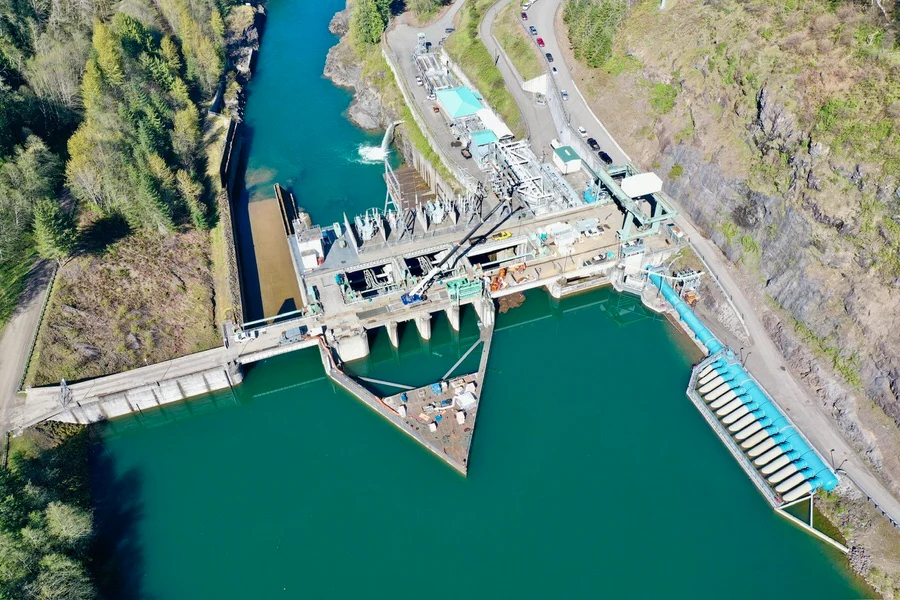
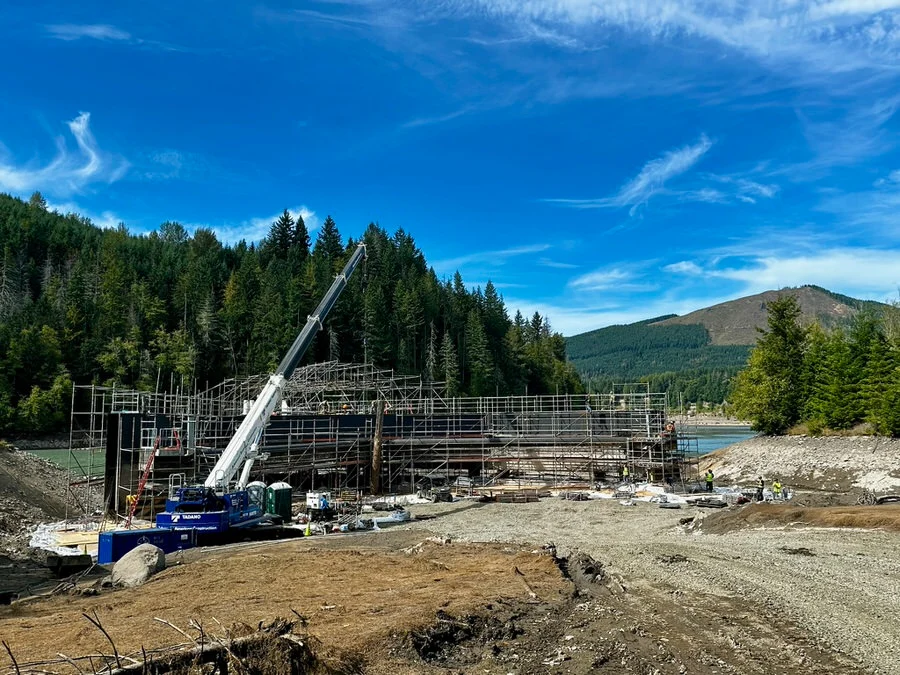
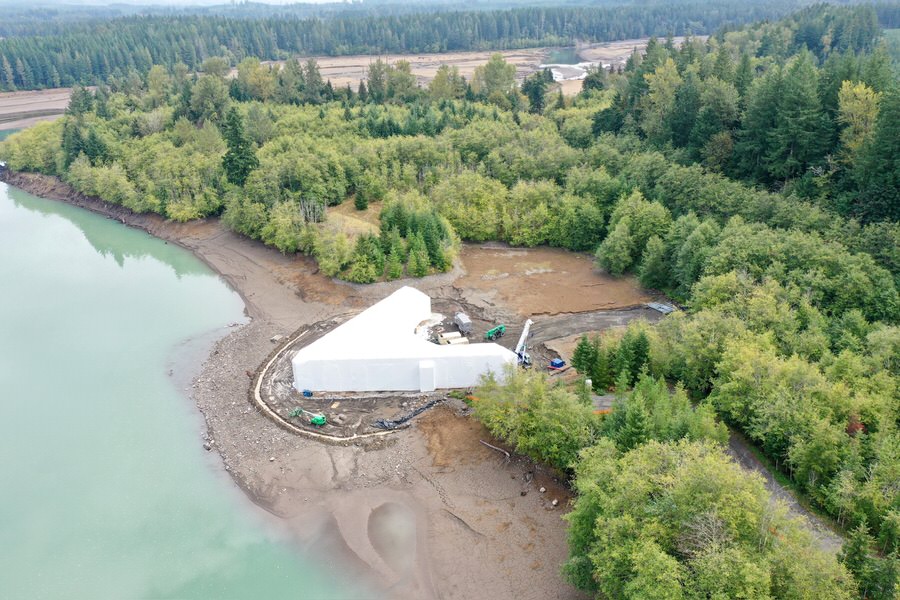
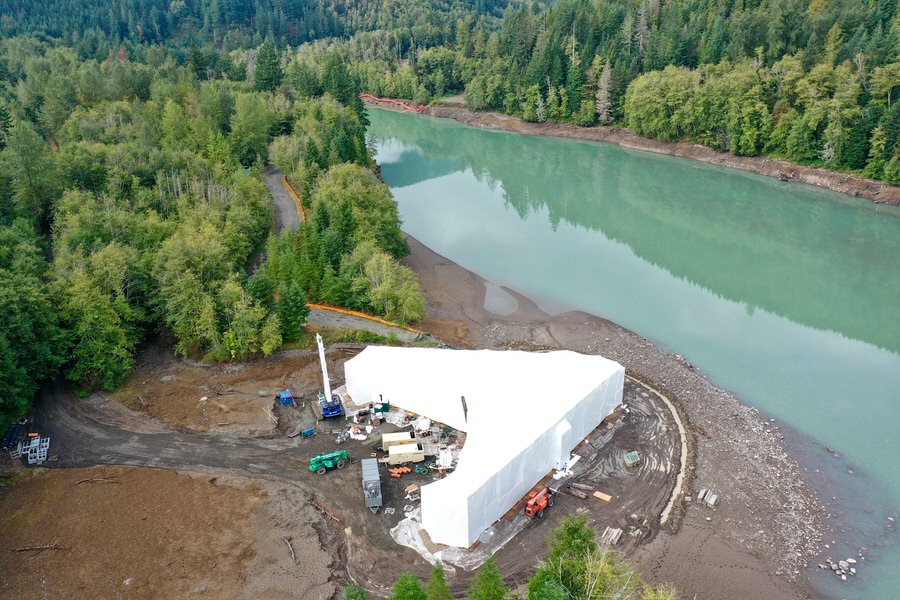
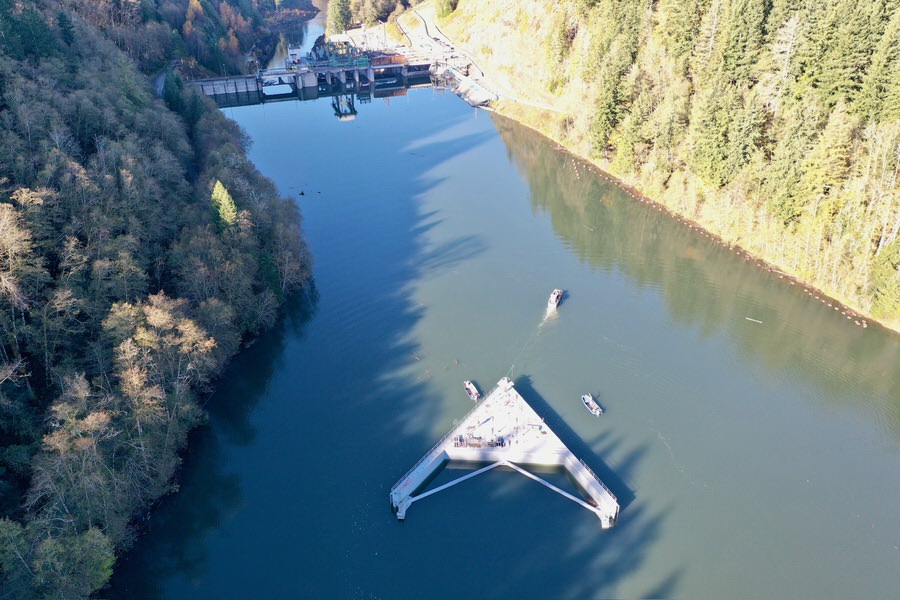
Advanced American Construction (AAC) partnered with Lewis County Public Utility District (LCPUD) to rehabilitate the floating debris barrier protecting the Cowlitz Falls Hydroelectric Dam. Constructed in the early 1990s, the 500-ton triangular steel structure measures 149 feet per side and 20 feet tall, with half submerged to prevent logs and floating debris from reaching the dam’s intake.
Years of environmental exposure had significantly deteriorated the barrier, requiring full interior and exterior rehabilitation, including structural and mechanical upgrades to extend its service life. The work was constrained by strict environmental regulations and a highly compressed schedule tied to power production. The Cowlitz Falls facility generates approximately 260,000 megawatt-hours annually, limiting AAC to a 60-day reservoir drawdown window to complete the work without impacting operations.
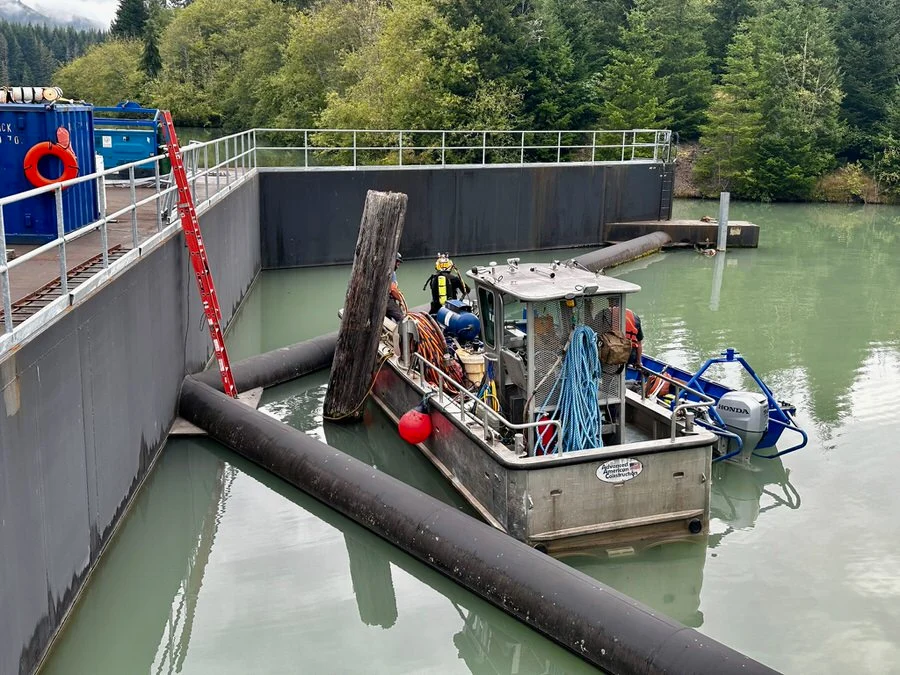
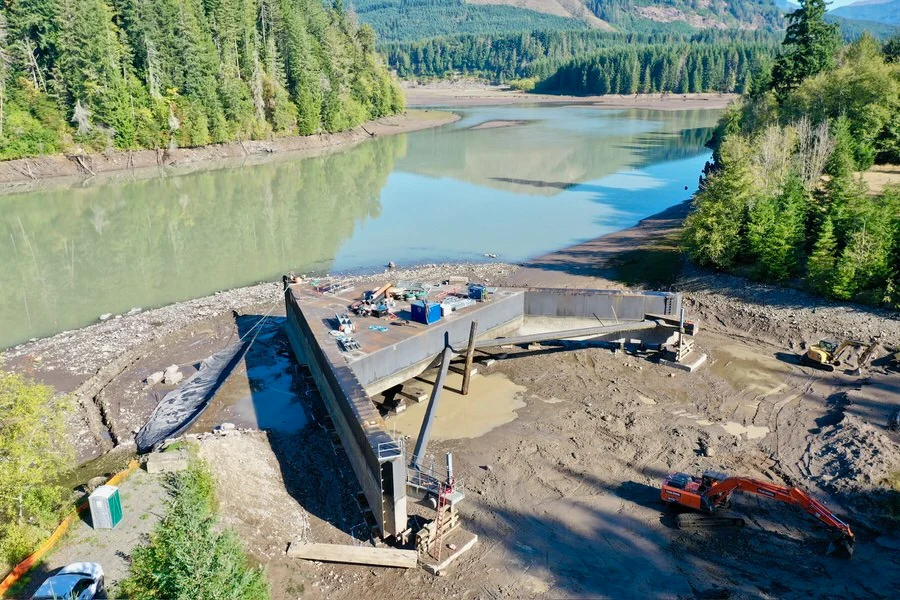
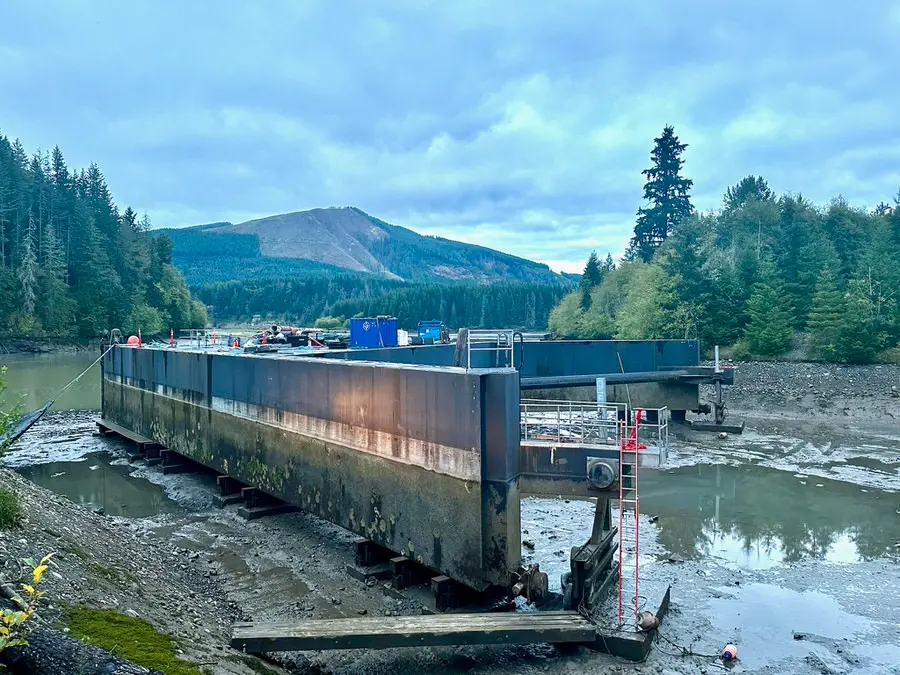
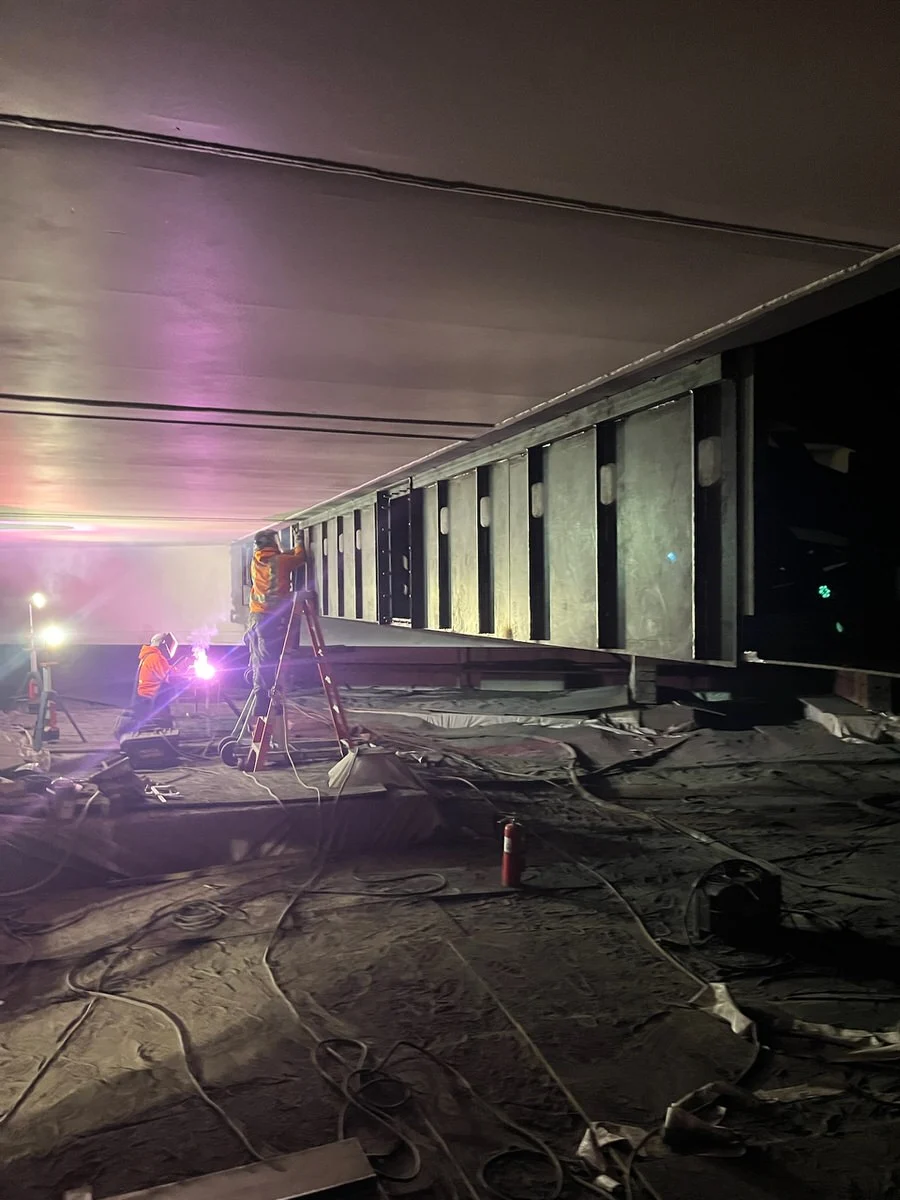
To maximize the schedule, AAC completed interior rehabilitation while the barrier remained attached to the dam prior to drawdown, overcoming extreme temperature differentials during blasting and coating operations. Then, just before the reservoir drawdown, skilled boat crews maneuvered the barrier away from the dam and towed it upriver to the dry-dock area. Once in position, AAC utilized divers to install guide rods off the dry dock blocks to ensure accurate alignment and a precise landing of the barrier onto the blocks. During the drawdown, skilled boat crews and divers towed and precisely positioned the barrier onto its original drydock blocks using guide rods for accurate alignment.
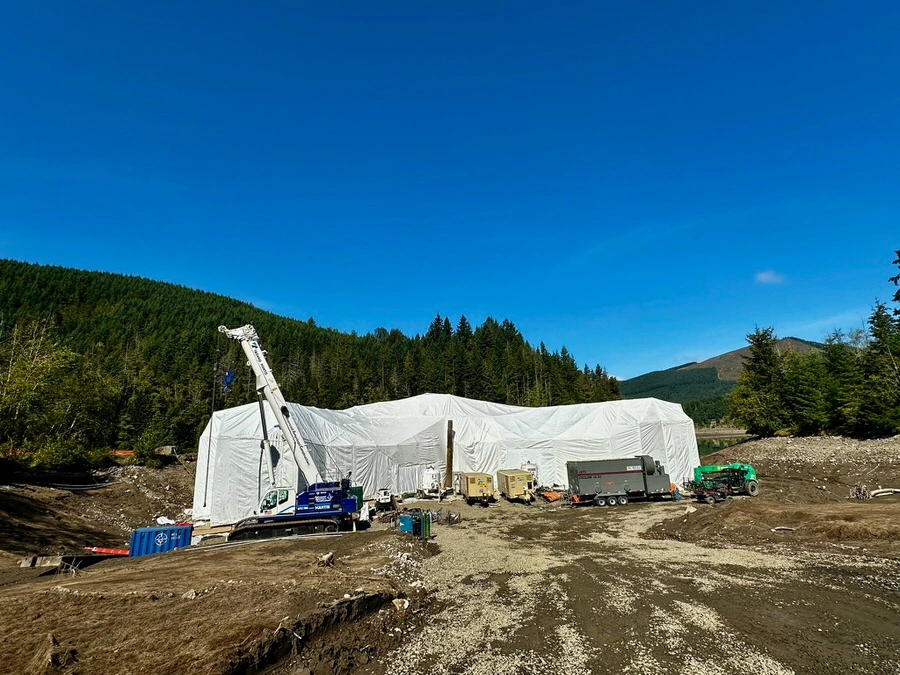
AAC rapidly stabilized the riverbed, constructed a rock pad, and fully encapsulated the structure to create a safe and environmentally compliant work area. As work progressed, additional scope was added, including upgrades to eductor tank hatch covers and the installation of topside-operable mud valves. To maintain schedule, AAC transitioned to 24-hour operations.
Final rehabilitation of areas blocked by drydock supports was completed using a carefully planned lift involving custom cribbing, crane mats, and multiple 55-ton jacks. Once complete, the site was demobilized, and the barrier was floated and precisely repositioned against the dam using newly installed mechanical guides, without damage to new coatings or upgrades.
Project Highlights
- Full rehabilitation of a 500-ton floating debris barrier
- Completed within a 60-day reservoir drawdown while maintaining power generation
- Precision towing, diver-assisted alignment, and drydocking on original blocks
- 3,000 cubic yards of sediment removed to access drydock infrastructure
- Structural and mechanical upgrades extending barrier service life
- Safe, environmentally compliant execution near live hydroelectric facilities